The Anatomy of a Perfect Prompt: Subject, Style, Light, Lens, Mood
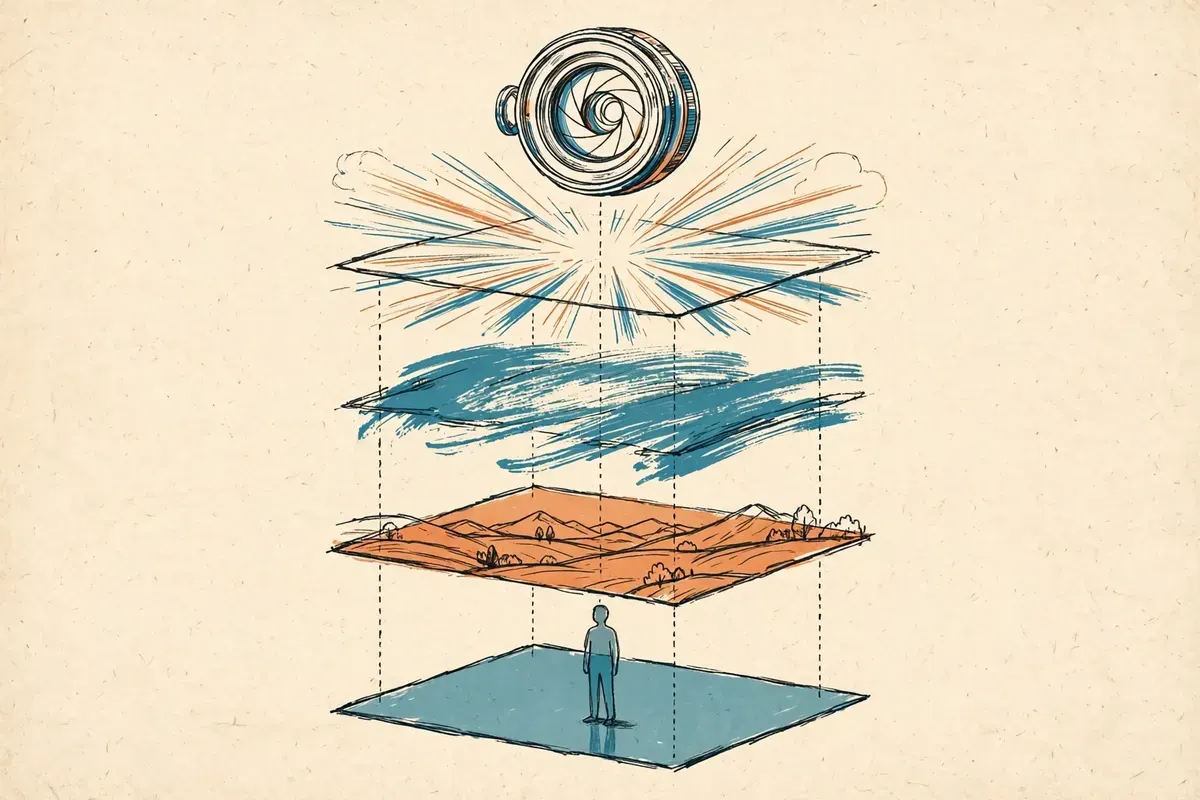
Prompts fail for a boring reason: they are written in the order the writer thought of things, not the order image models weigh them. Models read left to right and weight early tokens more. So build every prompt as a five-layer stack, in this order.
Layer 1 — Subject (what + doing)
The first words decide the image. "A red sneaker floating above a wet city street" beats "an amazing shoe picture". Concrete noun, specific detail, one action.
Layer 2 — Setting (where)
Environment, background, era. "Tokyo alley at night, steam rising" transports the subject; without it the model invents a void.
Layer 3 — Style / medium (how it is rendered)
Photograph, watercolor, 3D render, anime — plus the sub-style: "editorial studio photography", "flat vector illustration". One medium per prompt; mixing "photo, painting, 3D" produces mush.
Layer 4 — Light + lens (how it was captured)
The realism layer. Light: source, direction, color. Lens: focal length or distance. This layer is what separates "AI-looking" from "shot on a camera".
Layer 5 — Mood + parameters (the finish)
Two mood words, then platform parameters: Midjourney gets --ar 16:9 --v 6, Stable Diffusion gets a negative prompt, DALL·E gets a plain-English closing sentence instead.
One stack, four platforms
- Midjourney: comma phrases + parameters at the end.
- DALL·E: rewrite the same stack as two natural sentences; drop parameters, say "wide 16:9 composition" in words.
- Stable Diffusion / Flux: comma tags + a negative prompt: "blurry, distorted hands, extra fingers, watermark".
- Leonardo: the stack plus its Prompt Magic / Alchemy toggles doing the quality work.
Print the stack. Tape it to your monitor. Every guide on this blog is just this framework applied to a specific job.